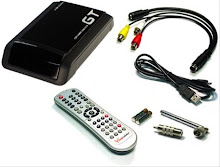
Dish Network HDTV VOOM HDTV Comcast HDTV Your Answers to All

Dish Network HDTV, VOOM HDTV, Comcast HDTV - Your Answers to All
By Mike Lazier

What is HDTV?

HDTV stands for High Definition Television. It is fully digitalized. The major differences that differentiates HDTV from other standard TV are
An increase in picture resolution
16:9 widescreen as standard
And ability to support multi-channel audio( Dolby Digital)

The unique quality of HDTV is that it has greater resolution. HDTV broadcasts in one of the two formats; 720p and 1080i. The number refers to the number of lines that are used to display picture and the letters mean whether the signal is progressive scan, p, or interlaced, i. The 16:9 widescreen helps deliver the picture properly. The pictures are not panned or scanned during transmission and you can view them with integrated 5.1 Dolby Digital surround sound.

VOOM HDTV

VOOM HD Networks was developed by Rainbow Media. When the company saw the dawn of loss it was picked by EchoStar, the parent company of Dish Network. VOOM HD networks have the largest retinue of high-definition channels from which 10 were taken and were added to HDTV packages as an extra option. By 2006, when Dish networks convert their receivers from MPEG-2 to MPEG-4, Dish would add another 11 high-definition VOOM channels. VOOM broadcasts in 1080i, utilizing 5.1 Dolby Digital surround sound. This package as whole offers 1700hours of HDTV every week.

Comcast HDTV

Comcast HDTV is the high definition service focused on broadband cable, commerce and content. Its contents include HBO, ESPN, Starz, Showtime, TNT, and Discovery. Depending upon the TV, Comcast will supply you either HDTV set-top box or an HDTV CableCard. With this cablecard you can watch encrypted cable HDTV with a CableCard slot. CableCard doesnt allow an access to features like interactive TV, pay-per-view and on demand.

Requirements for HDTV

To receive HDTV broadcast you need either a TV with a built-in HDTV tuner, a HDTV receiver and cable HDTV or satellite HDTV receiver like Dish Network HDTV.

Dish HD Programming

Dish Network HD Programming includes top 29 channels with 200 hours of programs per day.

Sport channels: It includes ESPNHD, ESPN2Hd, HDNet, HDNFL, TNT, World sport and rush hd.

Movie channels : HDNet MOVIES, HBO HD, SHO HD, MONSTERS, WORLD CINEMA, FILM FEST, FU, Starz HDTV.

Entertainment channels: Discovery HD, Animania, HGTV, RAVE HD, TNT, GAMEPLAY HD, Family Room, universal HD, National geographic channel.

News and Variety: GALLERY HD, HDNews, HDNet, TreasureHD, ULTRAHD.

Mike Lazier is a senior editor and an expert panelist with AFreeDish.com - one of the leading Authorized Dish Network Web Retailers.

Detailed information on Dish network package pricing is just a click away.

Article Source: http://EzineArticles.com/?expert=MikeLazier
http://EzineArticles.com/?Dish-Network-HDTV,-VOOM-HDTV,-Comcast-HDTV---Your-Answers-to-All&id=286476

What is HDTV?

What is HDTV?
By Kamal Kannan

High Definition Television is an international digital TV standard aired in 16:9 format (4:3 for normal TVs) and in Dolby Digital surround sound.Viewers get clear contoured shows with vibrant colors and a wider depth-of-field compared to normal systems.HDTV has up to five times the number of pixels on standard PALs used now.In America and Japan,films and series are aired via HDTV offered by Pay-TV stations.

What kind equipment is needed?The rule is digital data transfer.You won't be able to capture HDTV signals with the old antenna perched at the top of your roof.At first,HDTV signals were aired through satellite,but now it can also be done thourgh cable.It's yet to be determined whether HDTV can be recieved through a DVB-T (Digital Video Broadcasting).It might not work as transfer signals of HDTV are fairly complex for DVB-T to handle.

When was HDTV born?In the early Nineties,HDTV was suggested as TV standard in Europe under the project D2-MAC.However,the proposal failed as data transfer then was still analog.Equipment like recievers and display systems weren't ready as well.The first TV station in Europe to air a HDTV program in full was HD1(www.hd-1.tv ) in belguim.The station started on January 1,2004 under the name Euro 1080 and broadcasted through the Astra satellite.

Can HDTV be recieved only through satellite?Analog equipment cannot be used.A HDTV display should support the 16:9 format and a resolution up to 1,280 x 720 pixels.To avoid purchasing wrong displays,look for the HD ready sticker which guarantees compatibility.Also,a HDTV reciever (approx 400 Euro) is required.If you're not HDTV ready,you may still watch PAL shows which are broadcasted parallel to HDTV by TV stations.

720p or 1080i,which is better?On PAL,resolution are at 576 (vertical) x 720 (horizontal) rows.Currently,for HDTV,two general resolutions are used - the 720 x 1,280 and 1,080 x 1,920.There are ongoing debates as to which one is better of the two but no conclusion has been drawn yet.So the probable format is still up to market selection.On PAL,HDTV 1080i is broadcasted in half-pictures whereas 720p is in the full picture format.720p exudes a soothing image,but 1080i has a better and clearer resolution.

When to migrate?There's no doubt that HDTV would be replacing PAL.It's only a matter of time before that happens.Prices are now still steep with equipment costing up to thousands of dollars just for a standard display and reciever.However,manufacturers are introducing newer models by the month,therefore providing consumers with more competitive prices.If you only watch news or game shows on TV,then migrating to HDTV might not be feasible,but if you're a movie or sports fan,then HDTV is the way to go.

Why haven't many TV stations adopted HDTV?Not many own a HDTV setup.Besides that,many station are wary due to higher cost involved,especially for producing their own programs in HDTV.Also,production equipment like high-end video cameras etc would be a necessity.Face makeup needs to be near-prefect as every little wrinkle would be visible.It's estimated that each HDTV airing would incur an extra 25 percent cost.However,experts say that most of Europe will be airing their programmes in HDTV format by the year 2008.

Can HDTV films be recorded?The film industry is trying to equip all HDTV format files with HDCP copy protection.This way,HDTV programmes can only be watched and not recorded.However,this restraint has already been penetrated by a Korean-made minibox called DVIHDCP.It changes the protected signal into VGA format hence allowing it to be copied.In truth,the minibox was not designed specifically to hijack the copy-protection plan,but was instead used to display HDTV through a beamer/projector.

This article can be published as long as the resource box including the backlink is included. More information on technology and computer articles is available on computingarena.com - a site about technology article.

Article Source: http://EzineArticles.com/?expert=KamalKannan
http://EzineArticles.com/?What-is-HDTV?&id=306486

How to Buy a LCD TV with HDTV

How to Buy a LCD TV with HDTV
By Linda Harrison

If this doesn't get you excited, then nothing will. LCD TVs have become all the rage and there is nothing better than a big screen TV. And when you couple LCD TV with HD TV, look out. An amazing physical display combined with a fantastic output. This is what is happening in LCD TV technology today.

If you are like most people looking to replace your TV, youve probably been paying close attention to High Definition Television sets (HD-TV). Unlike the previous generation of TV, which used analog signals to transmit information, HD-TVs use digital signals to transmit a signal and receive and display information directly on the television set. The HD-TVs also use a High-Resolution digital television set and Dolby Digital surround sound. The combination of the two creates incredible pictures and sounds the best available on the market to date. HD-TV television offers viewers a level of detail they haven't seen before: including a resolution about five times higher than that of analog TV.

The main thing to remember when you are shopping for HD-TV set is that just because a television is digital it does not mean it is necessarily HD-TV compatible. There are two levels below the HD level (standard definition TV and enhanced definition TV), both of which are vastly better than analog televisions but still of considerably lower quality than an LCD TV- HD-TV set. Since the FCC has mandated that all television sets eventually switch from analog to digital, you should know the differences between the different types of digital TVs.

Here are some tips. When looking to purchase an HD-TV, remember to compare the difference in picture resolution, audio features, and pixels. HD-TV requires a minimum of 720 horizontal scanning lines (enhanced definition TV, while considerably higher than standard definition TV, only features a minimum of 480 scanning lines) and the resolution on an HD-TV is 1920 x 1080 compared to enhanced definition TV, which only has a resolution of 1280 x 780.

When you experience a HD-TV image and then compare it to other TVs' technology on the market, the difference will be clear. With HD everything looks and sounds far more realistic than on any other type of system. We think that once you see a big screen LCD TV with HD-TV, the choice will be clear.

This is just the tip of the iceberg when looking for a HD LCD TV. In fact, many of the most important tips haven't been mentioned here. Learn about LCD TVs before making a purchase.

Lind Harrison is author of Buy A LCD TV. Read your copy at http://www.welcdtv.com.

Article Source: http://EzineArticles.com/?expert=LindaHarrison
http://EzineArticles.com/?How-to-Buy-a-LCD-TV-with-HDTV&id=127552

High Speed Winds and High Speed HDTV Signals Do Not Mix on Motor Homes

High Speed Winds and High Speed HDTV Signals Do Not Mix on Motor Homes
By Lance Winslow

Well it is finally here HDTV by satellite for your Motor Home. And yet what if you are out in the Wyoming Plains, California Desert, Texas Gulf Coast or North Dakota? Perhaps this is why there are wind generators there? We all know these areas are high-wind areas nearly all-year around. Well Satellite TV antennas, specially new HDTV motor home antennas simply have a tough time with all this.

Indeed high-speed winds do make things tough, but consider the brand new HDTV Satellite Systems and Antennas by MotoSat. The new antenna is ultra-cool the T2 Automotion and it is small and completely enclosed. Only about 12 inches in height and 20 inches diameter and the antenna is encased in a mini-Super Dome. Kind of looks like a Wind Tunnel tested UAV flying saucer and Like other self-tracking systems, you simply press a button and it find your HDTV Satellite and bingo; there you are.

Another thing to consider when choosing a Motor Home HDTV antenna is not only the high winds, but what about all this high-heat? Well this little baby is tested for 131 degrees and if it is that hot you will not find me anywhere near there. In Motion HDTV is finally here; it figures MotoSat would have it first. Sure is nice looking on top of the motor home I tell ya!

Lance Winslow - Online Think Tank forum board. If you have innovative thoughts and unique perspectives, come think with Lance in the Online Think Tank and solve the problems of the World; www.WorldThinkTank.net/

Article Source: http://EzineArticles.com/?expert=LanceWinslow
http://EzineArticles.com/?High-Speed-Winds-and-High-Speed-HDTV-Signals-Do-Not-Mix-on-Motor-Homes&id=270823

Dish Network HDTV

Dish Network HDTV
By Julia Hall

If you are not familiar with HDTV (high definition television) you probably will be soon. Already widespread in the U.S, Australia and Japan, it is becoming easier to find a variety of programs in HD format. Three main differences separate HDTV from regular TV: increased picture resolution, multi-channel audio, and a standard 16:9 widescreen aspect ration. Each of these differences contribute to what people describe as incredible sound and picture quality. With HDTV you receive about 6 times sharper of a picture than a standard broadcast, making viewing more lifelike with more detail and truer color. High definition is defined in part by the number of lines of resolution on your TV screen. The higher the number of lines, the more detail is available in the picture. Standard definition television typically contains about 480 lines of resolution, while HDTV can contain 1080 lines. Just as important, with regular TV every other resolution line is scanned continually to form the picture. HDTV, however, presents the picture all at once. These two facts combine to create the crisp, clear picture HDTV is known for.

Another difference between HDTV and regular TV is the aspect ratio. This number refers to the shape of the screen, with the standard 4:3 referring to the squarish shape observed in most TVs. High definition programming is broadcast in a 16:9 aspect ratio, which creates its characteristic wide-screen appearance. With a larger aspect ratio, you can observe more of the filming field and therefore see more of what is happening. This difference makes viewing an HDTV program similar to sitting in a theater.

The final difference in an HDTV system is the sound quality. All HDTV is broadcast is Dolby Digital Standard with some programs in stereo and others in surround sound. Surround sound combines multiple speakers in front of the viewer and behind plus a subwoofer to make the person feel as if they were part of the action.

DISH Network offers both the equipment and programming necessary to play HDTV programs on your HD-ready television. In order to view programs in HD format, you will need a special HD receiver. DISH Network offers 2 choices. The ViP211 HD receiver can be used for 1 television and supports both HD and standard DISH Network programming. It also can be used with Dolby Digital Surround Sound. For 1 or 2 TVs, the ViP622 DVR combines a HD receiver and digital video recorder. Like the ViP211, it can be used with both standard and HD programming and supports Surround Sound.

Once the HD receiver is connected to your television, you can start receiving programming. HDTV programming has increased greatly in the past year as companies have seen how popular the technology is becoming. Currently DISH Network offers 4 package levels for HD customers. Each level contains about 25 high definitions channels, plus a variety of standard channels. The Platinum package level also includes Showtime, Starz, and HBO in HD format. HDTV local channels are available in some areas for an additional charge.

The popularity of HDTV has brought down its cost to a reasonable level. DISH Network has packages that include HDTV for less than $50 each month. It is likely that more channels will be available in HDTV in the coming months and that the prices will be soon be comparable to that of standard definition programming. Overall, HDTV offers such superior quality over regular programming that, even with a small extra charge for the service, it is a good value.

J. Hall writes articles for consumers who want to find the best Dish Network offers currently available. She has written for many major publications about the latest satellite TV deals and promotions and how buyers can find the best discounts.

Article Source: http://EzineArticles.com/?expert=JuliaHall
http://EzineArticles.com/?Dish-Network-HDTV&id=255457

Dish Network Has HDTV Programming To Go With Your Home Theater

Dish Network Has HDTV Programming To Go With Your Home Theater
By Julia Hall

HDTV, which is shorthand for High Definition Television, offers a lot of benefits to the TV enthusiasts everywhere, but one of the most attractive things that it can provide is a cheap way to construct a home theater. This is especially true because High Def technology provides a lot of technological alternatives that will provide a lot of different possibilities for creating a home theater in a variety of homes. For example, a Plasma screen display may be the screen of choice in a darkened basement. For the home theater that will be set up in a bright living room or that the owner wants to integrate with his or her home computer system, an LCD screen might be the display of choice. For the person who wants a massive screen, a Digital Light Processing (DLP) projector may be the way to go because it can project a screen that is measured in feet instead of inches. The DLP projector is also a good choice for anyone who wants their home theater to double as their living room and doesn't want equipment messing up the decor. That's because the projector is easily hidden and the screen can be the same type of pull down screen used in old fashioned slide shows.

Of course if you're going to use high definition television in order to construct your home theater you're going to need high definition television programming in order to get the most out of it. That's because high definition television is a completely separate television format from normal television, and as such, it needs special programming that meets the standards of high definition.

Of course since Dish Network is a leader in television in many other ways, it's no wonder that it can provide you with high definition television programming as well as the special satellite receiver equipment necessary to view it. In fact, Dish Network is the leader in the television service provider industry in general when it comes to high definition television programming. Dish Network has four high definition television programming packages including the Bronze Level High Definition Entertainment Package which comes with twenty five high def channels (already more than the maximum offered by competitors!) and eighty normal channels. The next one up, the Silver Level High Definition Television Entertainment Package, has the same twenty five high def channels, but the number of normal channels provided goes up to two hundred. The Gold Level High Definition Entertainment Package has a full twenty six HDTV channels and a whopping two hundred and forty normal ones. The Platinum Level High Definition Television Entertainment Package has the same two hundred and forty normal channels, but the number of high def channels goes up to thirty. If you want more HDTV channels, any local high definition channels that are available in your area can be added to any of the programming packages for a mere five bucks a month.

The channels themselves cover a wide variety of subjects including science and educational programming, sports, movies, documentaries, music, video gaming, and more. All of this proves that Dish Network has what you need to enjoy the home theater of your dreams.

J. Hall writes articles for consumers who want to find the best Dish Network offers currently available. She has written for many major publications about the latest Dish Network Deals and promotions and how buyers can find the best discounts.

Article Source: http://EzineArticles.com/?expert=JuliaHall
http://EzineArticles.com/?Dish-Network-Has-HDTV-Programming-To-Go-With-Your-Home-Theater&id=457390

Which is better? EDTV vs HDTV

Which is better? EDTV vs HDTV
By Bradley James

With all the new digital formats out there, it is of little surprise that there exists considerable confusion about EDTV and HDTV. First of all, EDTV stands for Enhanced Definition Television, while HDTV stands for High Definition Television. TVs equipped with either of these formats are capable of receiving and potraying images in a digital fashion - both of which are superior in visual quality to the standard TV (SDTV).

Which is better, EDTV, or HDTV?

This is a question that comes up quite often, and it really has a simple answer: HDTV is better. However, EDTV wasn't really made to be a competitor for HDTV, but rather a transition technology that was better than standard, but not all the way High Definition, as HDTV is. And although Enhanced Definition Television (EDTV) doesn't quite offer the oustanding life-like quality attributed to High Definition Television (HDTV), its picture is actually closer to HDTV than regular television. HDTV has an impressive 720 progressive scanning (1280x720 pixels) or 1080 interlaced (1920x1090 pixels) lines. Thus, it easily meets the requirement of high definition broadcasts. EDTV, on the other hand, displays pictures at 480 progressive scan (640x480 pixels), which is the the highest resolution available on DVD. In fact, EDTV is considered optimized for the DVD format. However, this puts a severe limit on EDTV, which is simply not able to display higher resolution HD content.

Our recommendation is that, when purchasing a new TV, you consider getting one that is HD-ready. It is likely that all broadcasts will transition over to true HDTV format within the next decade or so. Be advised, however, that you will need to purchase an external set-top box with an ATSC (Advanced Television Systems Committee) tuner in order to receive digital HDTV programming. Many cable and satellite providers, if they provide HDTV content, may offer this tuner for free. One final note, you may want to consider buying a LCD TV, as most are HDTV ready, and do the best job of displaying those beautiful HD images.

Bradley James is a senior editor at SciNet.cc, a website containing many helpful consumer electronics review articles. For more information on EDTV and HDTV TV technology, please visit our EDTV vs HDTV TV webpage.

Article Source: http://EzineArticles.com/?expert=BradleyJames
http://EzineArticles.com/?Which-is-better?-EDTV-vs-HDTV&id=30654